

Loot casino Plinko game
Introduction
Plinko looks almost too simple to deserve a serious breakdown. A ball drops from the top of the board, hits rows of pegs, changes direction again and again, and lands in a payout slot at the bottom. That is the whole visual idea. But after testing Loot casino Plinko and comparing it with standard online slots, crash titles, roulette-style formats, and other fast best games page at Loot Casino, I can say the simplicity is a bit deceptive.
This is one of those formats that reveals its real character only after a few sessions. On the surface, it feels light, quick, and easy to read. In practice, the experience changes sharply depending on the selected risk level, the number of rows, and the player’s expectations. For some, Plinko is an ideal short-session game with instant feedback. For others, it can feel harsher than it first appears, especially when a series of low outcomes arrives faster than expected.
That is exactly why Loot casino Plinko deserves a closer look as a standalone game page rather than a passing mention in a general casino guide. The core question is not whether Plinko is trendy or visually recognizable. The real question is what this game actually offers to a player in New Zealand who wants to understand the pace, the logic behind the board, the degree of randomness, and the kind of session this format creates.
In this review, I will stay focused on the game itself: how Plinko works, why it attracts attention, what its strengths and limitations are in real play, and who is likely to enjoy it. Just as importantly, I will explain where the hidden tension comes from. Because while the interface looks clean and almost playful, the emotional rhythm of Plinko can become surprisingly intense once higher risk settings enter the picture.
What Loot casino Plinko is and why players keep returning to it
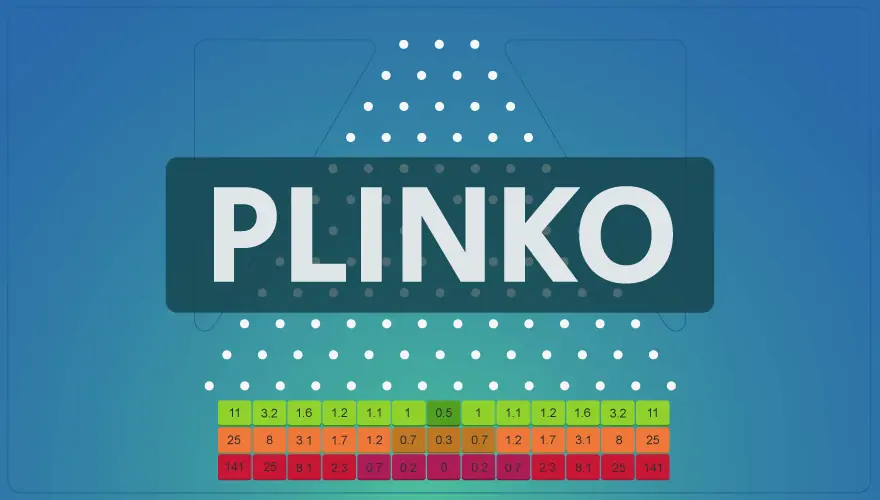
Plinko is a chance-based casino game built around a vertical board filled with pegs. The player chooses a stake, usually selects a risk level, sometimes adjusts the number of rows, and then drops a ball from the top. As the ball falls, it bounces left and right in a sequence of random deflections until it lands in a multiplier slot. That multiplier determines the return for that round.
The reason this format stands out is not complexity. It is clarity. In a slot, many players need time to understand paylines, symbols, bonus overview rounds, scatter logic, expanding reels, and feature conditions. In Plinko, the entire round is visible from the first second. You can see the path. You can see the endpoints. You can understand the result without reading a paytable for ten minutes.
That accessibility matters. A player can open Loot casino Plinko and grasp the basic structure almost immediately. At the same time, the game avoids feeling flat because the distribution of outcomes is not even. Lower multipliers tend to sit around the centre, while the rare high multipliers usually appear near the far edges. That design creates a clean tension: the most dramatic returns are visible the whole time, but they are also the hardest to reach.
There is another reason Plinko has become so noticeable across online casino platforms. It compresses anticipation into a very short window. In a slot, suspense often builds through reel animations, near-misses, or bonus triggers. In Plinko, suspense comes from watching a single object travel through a board where every bounce feels like a tiny decision made by chance. It is a brief sequence, but it is easy to get drawn into it.
One of the more interesting things I noticed is that Plinko often attracts two very different player types at once. The first group wants a straightforward game with no clutter. The second is chasing the emotional spike of a rare multiplier. That overlap is unusual. Many casino titles appeal either to casual rhythm or to high-variance excitement. Plinko can sit in both categories depending on settings.
How the Plinko board actually works in play
At the mechanical level, Loot casino Plinko is built on a simple chain of random interactions. The ball starts at the top, then collides with peg after peg on the way down. Each contact sends it slightly left or right. By the time it reaches the bottom, the final landing position reflects a long sequence of tiny random changes rather than one dramatic event.
That structure is important because it shapes how players interpret the game. Many people instinctively watch the path and feel that the ball is “almost” heading toward a better slot before turning away. In reality, the route is not a skill-based progression. It is a visual expression of random distribution. The board looks physical and intuitive, but the outcome still belongs to chance.
Most Plinko versions let the player adjust at least two key variables:
Risk level — usually low, medium, or high.
Rows — the height of the board, which affects the path length and the spread of possible multipliers.
These settings are not cosmetic. They radically change the session. A lower-risk setup usually compresses results toward the middle. That means more frequent modest returns and fewer dramatic swings. A higher-risk setup widens the spread: many rounds may end in poor multipliers, but the top-end potential becomes much larger.
The number of rows also matters more than it first appears. A taller board creates more bounce points, which tends to produce a broader and more layered distribution of outcomes. In practical terms, more rows can make the session feel more suspenseful because the ball spends longer on screen and the outer multipliers often become more striking. Fewer rows generally mean a faster, more compact round.
| Setting | What changes on the board | What it means for the player |
|---|---|---|
| Low risk | Results cluster more toward central slots | Shorter swings, steadier rhythm, fewer standout hits |
| Medium risk | Balance between centre-heavy and edge potential | Mixed session profile, moderate tension |
| High risk | Wider spread between weak and rare top multipliers | Sharper variance, longer dry spells, stronger emotional spikes |
| Fewer rows | Shorter path and simpler distribution | Quicker rounds, easier to track, less drawn-out suspense |
| More rows | Longer path and broader result map | More tension per drop, more visible contrast between outcomes |
A useful way to think about Plinko is this: the board is not there to give you control; it is there to make randomness legible. That is one of the reasons the format works so well. The player can watch chance unfold in real time instead of receiving the result as a static number.
Why the session feels fast, tense, and oddly absorbing
The tempo of Loot casino Plinko is one of its defining traits. A round resolves quickly, often in just a few seconds, yet it rarely feels abrupt. There is enough animation to create anticipation, but not so much that the pace drags. That balance gives the game a strong “one more drop” quality.
On paper, this sounds harmless. In practice, it can become the central behavioural pull of the format. Because each round is short and the interface is clean, players can move through many results in a brief session without fully noticing how quickly the sample size is growing. This is not unique to Plinko, but the effect is stronger here than in many feature-heavy slots. There are fewer interruptions. Less reading. Less waiting. More repetition.
What keeps the experience engaging is the contrast between visual simplicity and emotional variability. One drop may land near the centre and feel routine. The next may drift toward an outer lane and create a sudden spike of attention. Even when the final result is not large, the path itself can create a sense of near-drama.
I think this is one of the most overlooked aspects of Plinko: it turns tiny directional changes into suspense. A slot often relies on symbols aligning. Plinko relies on movement. That difference sounds minor, but it changes how a session feels. You are not watching a board reveal a result. You are watching the result approach you, bounce by bounce.
Another memorable observation is that Plinko can feel calmer than slots at the interface level but harsher at the bankroll level if the player chooses aggressive settings. The screen is quiet. The rules are easy. Yet the financial rhythm can become sharp very quickly under high-risk configurations. That disconnect catches some players off guard.
Risk profile: simple to enter, not always simple to handle
Plinko is often introduced as an easy game for beginners, and that is only half true. Yes, the rules are easy to understand. No, that does not automatically make the session easy to manage. The risk profile depends heavily on the selected setup, and some versions can produce long stretches of underwhelming returns before a strong multiplier appears.
For a player at Loot casino Plinko, the key thing to understand is that volatility is not hidden behind bonus rounds or complex math models. It is right there in the multiplier layout. If the outer slots show large numbers and the centre is packed with modest outcomes, the game is openly telling you what kind of trade-off you are accepting.
Here is the practical version:
Low-risk Plinko suits players who want a more even session and can accept that the ceiling is less dramatic.
High-risk Plinko suits players who understand that many drops may disappoint before a rare high multiplier appears.
Medium-risk Plinko sits between those two, but it is not a magic compromise. It still requires discipline.
That is why I would not describe Plinko as universally suitable for casual players. It is suitable for players who like clear rules. That is different. If someone equates simple visuals with gentle bankroll behaviour, Plinko may prove more severe than expected.
It is also worth noting that the game can create an illusion of momentum. A few decent landings in a row may tempt the player to increase stake size, while a run of weak results may encourage chasing. Neither reaction changes the probability structure. Plinko is one of those formats where emotional self-control matters more than the interface suggests.
What probabilities and outcomes really mean during a live session
When players talk about Plinko probabilities, they often focus too much on the headline multipliers and not enough on distribution. The rare top-end numbers are what catch the eye, but they are not what defines most of the session. Most rounds tend to resolve closer to the middle of the board, where lower multipliers are typically concentrated.
This matters because expectation and experience can diverge fast. A player may enter the game thinking primarily about the maximum possible return. The actual session, however, is shaped by how often middling or weak results appear in between those rare peaks. If you do not account for that, the game can feel unfair even when it is behaving exactly as designed.
In practical terms, three factors shape the outcome profile: Table game fans will get more out of this review after reading compare crash games options at Loot Casino.
Board distribution — where the stronger multipliers sit and how narrow their lanes are.
Risk setting — how sharply outcomes are separated between common and rare results.
Session length — short sessions can feel extremely uneven because sample size is small.
That last point is especially important. Plinko can produce misleading impressions in a very short run. A player may hit an unusually strong multiplier early and assume the game is generous, or suffer a rough opening stretch and assume the opposite. Neither conclusion tells much on its own. Because rounds are rapid, the game invites snap judgments, but the underlying distribution does not care about recent drops.
One more point deserves emphasis: watching the ball bounce can create a false sense that certain release points or visual patterns matter. In legitimate online Plinko, the outcome is governed by the game’s random logic, not by manual timing skill. The visual path is part of the experience, but it should not be mistaken for a strategy layer.
| Player expectation | What often happens in reality |
|---|---|
| “The board looks simple, so results should be easy to predict.” | The layout is easy to read, but individual drops remain random. |
| “High multipliers are visible, so they should appear often enough.” | The most attractive slots are usually the least accessible. |
| “A few bad rounds mean the next one may improve.” | Each drop is independent within the game’s probability model. |
| “Fast rounds make bankroll impact easier to manage.” | Fast rounds can accelerate losses if stake control is weak. |
How Plinko compares with slots, roulette, crash games, and other casino formats
Loot casino Plinko occupies a very specific space between visual immediacy and probabilistic tension. It is not a slot, even though many players first encounter it in the same game library. It is not roulette either, despite the clear outcome zones. And it is not quite a Loot Casino Aviator crash game page with bonus terms and account details, although it shares that short-session intensity.
Compared with classic online slots, Plinko removes layers of symbolic design. There are no reels, no themed bonus rounds, no wild combinations, and usually no narrative framing. That makes it cleaner, but also less varied in presentation. If a player enjoys discovery, unlocking features, and long-form bonus sequences, Plinko may feel too stripped back.
Compared with roulette, Plinko is more visually kinetic. Roulette gives you a single final landing event. Plinko gives you a visible route to that landing. The psychological effect is different. Roulette delivers suspense through the wheel’s slowing motion. Plinko builds it through repeated micro-deflections.
Compared with crash titles, Plinko is less about decision timing and more about accepting the full path to a fixed result. In a crash format, the player often chooses when to cash out. In Plinko, the player commits before the drop and then watches chance complete the round. That makes it more passive in one sense, but also more transparent in another.
Here is the practical difference in plain language: slots are about layered events, roulette is about a final destination, crash is about timing, and Plinko is about distribution made visible.
That distinction helps explain who enjoys it. Players who want clean structure and immediate outcomes often appreciate Plinko. Players who want richer audiovisual variety or more interactive decision-making may not stay with it for long.
Where Loot casino Plinko performs well and where it can frustrate
Every casino format has trade-offs, and Plinko is no exception. Its strongest qualities are easy to identify, but so are its limitations once the novelty wears off.
The main strengths are practical rather than decorative. The game is easy to understand, quick to enter, and transparent in its core premise. You do not need to decode a paytable full of conditional features just to know what is happening. That makes it efficient for players who value straightforward gameplay.
It also does a better job than many simple games at making randomness feel visible. That may sound like a small point, but it matters. In some formats, losing rounds can feel abstract or disconnected. In Plinko, the path creates a sense of process. Even when the result is weak, the player sees how the round unfolded.
At the same time, the game has clear weak points. Repetition can arrive quickly, especially for players who need evolving features or thematic depth. There is also a real risk that the calm interface encourages more drops than intended. Because each round is so easy to launch, session control can slip without the player noticing.
The biggest practical frustration, in my view, is expectation mismatch. Players see a bright board, a falling ball, and a very readable layout. That can make the game seem lighter than it really is. Then high-risk settings introduce long dry stretches, and the emotional tone changes fast. The design looks casual. The bankroll swings may not be.
This is the third observation I think is worth remembering: Plinko often feels friendlier than it behaves. That is not a criticism of the format itself. It is simply a reminder that presentation and payout rhythm are not the same thing.
What to check before you start a session
Before launching Loot casino Plinko, I would recommend paying attention to a few specific points rather than jumping straight into repeated drops.
Look at the risk setting first. This is the single biggest factor in how the session will feel.
Check the row count or board depth. It affects both pacing and outcome spread.
Review the multiplier layout. Do not focus only on the maximum number; look at how much of the board is occupied by modest returns.
Set a session limit before the first drop. Fast games encourage impulsive extension.
Use demo mode if available. It helps you understand the rhythm without immediate bankroll pressure.
The demo point is especially useful here. In many casino games, demo play tells you only the basic interface. In Plinko, it can teach you something more valuable: how the session feels over time. You begin to notice whether the pace suits you, whether the board setup matches your tolerance for swings, and whether the repetition is engaging or tiring.
I would also suggest being honest about what you want from the session. If you are looking for a game with layered features, thematic progression, and changing bonus structures, Plinko is probably not the right pick. If you want direct, fast, and visually readable rounds with adjustable risk, it makes much more sense.
Who Plinko is likely to suit and who may prefer another format
Plinko is a good fit for players who appreciate straightforward design and do not need a complicated ruleset to stay interested. It also suits those who like short rounds and are comfortable with the idea that the most attractive multipliers may remain rare for long stretches.
I would say Loot casino Plinko is especially suitable for:
players who want instant understanding of the rules;
players who prefer fast rounds over long bonus build-ups;
players who like adjusting session character through risk levels;
players who value visual clarity more than theme-heavy presentation.
It may be a weaker fit for:
players who mainly enjoy classic slots with deep feature sets;
players who get frustrated by long stretches of modest outcomes;
players who mistake simple visuals for low-intensity bankroll behaviour;
players who want meaningful strategic input during each round.
That distinction is worth making clearly. Plinko is not a universal replacement for other casino games. It is a specific format with a specific appeal. When it matches the player’s expectations, it can be sharp, efficient, and genuinely engaging. When it does not, the experience can turn repetitive or punishing much faster than the clean interface suggests.
Final verdict on Loot casino Plinko
Loot casino Plinko offers a very clear proposition: fast rounds, visible randomness, adjustable risk, and a gameplay loop that is easy to enter but not always easy to manage. That combination is exactly why the format has become so noticeable. It strips away most of the clutter found in other casino games and leaves the player with a direct confrontation between chance, pacing, and payout distribution.
Its strongest side is clarity. You can understand the board quickly, see where the major multipliers sit, and feel the tension of each drop without learning a complicated system. It also stands apart from classic slots because the suspense comes from motion rather than symbol combinations. That gives Plinko its own identity.
The caution point is just as important. The game’s friendly appearance can hide a much sharper session profile, especially on higher risk settings. Fast rounds, visible high multipliers, and a “just one more” rhythm can make bankroll control more important than many newcomers expect. Simplicity here does not mean softness.
So, is Loot casino Plinko worth trying? Yes, if you want a casino game that is immediate, readable, and capable of producing very different experiences depending on how you set it up. But it is worth trying with clear expectations. Plinko suits players who enjoy short-form tension and can handle uneven result patterns without chasing. It will not suit everyone. For some, it will feel refreshingly direct. For others, too bare or too swing-heavy. That is not a flaw. It is the true character of the game.
FAQ
What is Plinko on Loot, and how does the ball drop work?
Plinko is a simple ball-drop game where the ball travels through pegs and lands into a payout zone. Each launch outcome is shown through a multiplier tied to the zone the ball lands on.
How does the game multipliers system work after each Plinko round?
After the ball lands, a multiplier displays based on the specific outcome zone. That multiplier is applied to the stake amount used for the round.
Before starting real-money play, what should players check about the demo mode?
Demo mode uses simulated balance and lets players understand the timing and how outcomes display. Real-money play requires confirming the stake for each round in the real-money mode.
How can players launch Plinko quickly when they are already logged in?
Log in, then open the Plinko game lobby and select the real-money or demo option shown there. Use the stake field and confirm the round start to drop the ball immediately.
Can Plinko be played in the mobile version, and how is the ball drop triggered on a phone?
Mobile play is supported through the mobile casino site and the casino mobile experience. The ball drop is triggered by tapping the start button, and the outcome multiplier appears after the ball lands.
How do mirror or working mirror options affect access to Plinko?
A mirror provides an alternative access route to the same casino platform. When one link is unavailable, the working mirror can help players reach the Plinko lobby and continue from their account.
What account verification steps should be completed before trying higher-stake Plinko sessions?
Verification is typically required for cash-out features, so completing it earlier avoids delays later. Prepare a valid identity document and follow the prompts in the account or cashier area.